Last updated on September 8th, 2026 at 07:35 pm
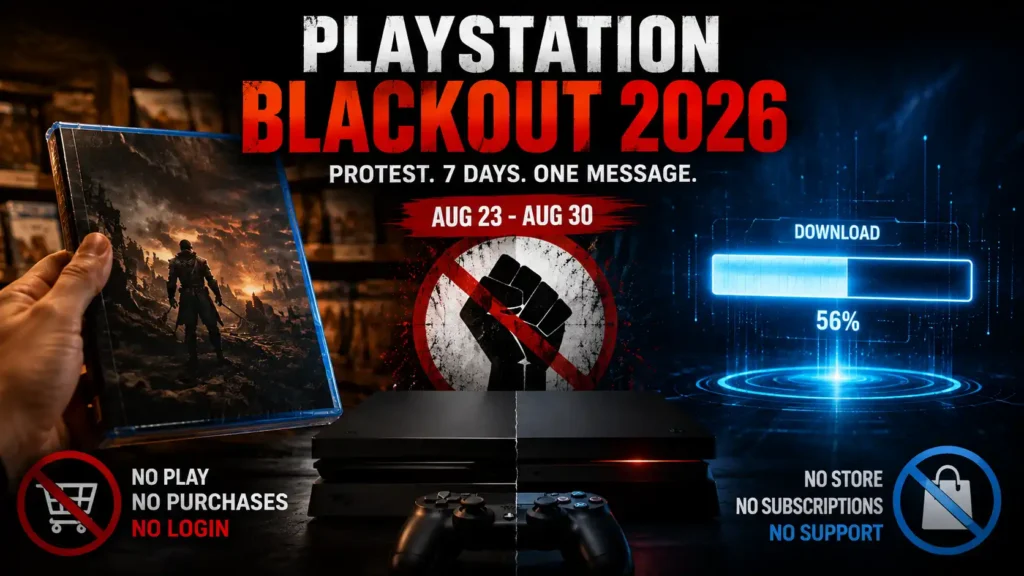
A chunk of the PlayStation community is putting their consoles down — and what started as a one-week protest has quietly turned into something with no end date.
No hacking, no server outage. Just players deciding, collectively, that they’re done logging in, spending money, and padding Sony’s engagement numbers. At least until something changes.
The protest runs under #PSBlackout, started August 23 at 7:00 PM local time. It was supposed to wrap August 30. It didn’t.
Here’s where things actually stand right now.
In This Article
ToggleRumor vs Reality: Is the PlayStation Blackout Real?
Short answer: yes, it’s real — but it’s not what a lot of people assume. This is not a server outage, a hack, or anything Sony did on purpose. PSN is fully up. Nothing is broken.
It’s a voluntary, player-organized boycott — real people choosing not to log in, not to play, and not to spend money on PlayStation platforms. Nobody is being locked out. If you log in right now, everything works exactly like any other day.
So the “reality” part is simple: it’s a protest, not a technical event. The part that’s genuinely murky is scale — nobody, not even the organizers, has hard numbers on how many people are actually participating. Petition signatures (370,000+) are the only public metric, and that’s a measure of support, not real-time participation.
As of the most recent update: the original one-week window (August 23–30) has technically closed — outlets confirmed the scheduled protest period ended on 30th August. But organizers at Does It Play? have since dropped the end date entirely, encouraging participants to stay unplugged indefinitely until Sony changes course. So the honest status right now is: the “official” week is over, but the movement itself hasn’t stopped.
Status Check (Skimmable Update Box)
Status Check: What’s Happening Right Now
- Protest window (Aug 23–30): officially concluded
- Movement status: organizers pushing for indefinite continuation
- Next real test: Marvel’s Wolverine (Sept 15) and GTA 6 (Nov 19) — will participants skip day-one purchases?
- Sony’s position: unchanged — CFO Lin Tao says no measurable business impact
- Best signal to watch: Sony’s next quarterly earnings call, when monthly active user numbers get reported
What's the PlayStation Blackout, Actually?
It’s fans, not Sony — the PS blackout 2026 has zero official Sony involvement. A creator account called Does It Play?, which has been vocal about game preservation for a while, is the one that got the hashtag moving. PSN isn’t going anywhere — servers stay up, nothing about the platform changes. What changes is whether players show up.
The logic is pretty blunt: if enough people go dark at once, Sony’s own engagement numbers become the message. No press release needed, just a dip in the charts that’s hard to ignore.
PlayStation Blackout 2026 Timeline — What's Changed Since It Started
This is where the story shifted for the playstation blackout protest August 2026. The original plan was clean and simple: seven days, August 23 to 30, done.
That’s not what happened.
July 26 — Does It Play? calls for a one-week blackout. Hashtag spreads fast across X, Bluesky, and Reddit.
August 22 — Sony sends out a Terms of Service reminder email to PlayStation users. Timing was sus. The ToS email reminded users they don’t own their digital games — they hold a license that disappears if the account gets suspended or closed. Sony said the email had nothing to do with the protest. Not everyone bought that.
August 23 — Blackout begins at 7:00 PM local time. Petition crosses 345,000 signatures.
August 24 (Day 1 update) — Does It Play? posts an update. The week-long deadline is now a minimum. New language: “Everyone is encouraged to go indefinitely until Sony change course. Pedal to the metal or we won’t get anywhere.”
August 25–27 — Petition climbs past 370,000 signatures. Blackout confirmed indefinite with no fixed end date.
That’s where it sits right now.
Why Are People This Angry?
Trace it back to July 1, 2026. Sony dropped the news: starting January 2028, no more physical discs for new PlayStation games. Everything after that cutoff is digital only, whether you’re buying it on the Store or picking up a box at a retailer.
To be fair to Sony, this isn’t some out-of-nowhere cash grab dressed up as “innovation” — digital already dominates how people buy games, and the company’s been saying as much. Anything with a disc release before 2028, or already out now, isn’t touched. Your library’s fine.
Read it straight from Sony if you want the source: PlayStation Blog.
But here’s the thing — this didn’t land in a vacuum. Fans have been stacking up grievances for a while: studios getting shut down, live-service bets nobody asked for, franchises left to rot while Sony chases whatever’s trendy. The disc news was the final straw for a lot of people, not the whole fire. It just happened to be the spark everyone could rally around.
PlayStation Boycott 2026 — Why This One Feels Different
Boycotts happen all the time in gaming. Most go nowhere. So why is this one getting traction?
Because it didn’t start from nothing. This has been building for a while — studio closures nobody asked for, live-service bets that flopped, franchises left sitting while Sony chased trends. The disc announcement landed on top of all of that.
The statement attached to #PSBlackout doesn’t mince words: “PlayStation has never felt more disconnected from its community.”
What’s different this time is the organizers aren’t asking people to never buy PlayStation again. It’s surgical. Don’t log in. Don’t spend. Make the silence count on Sony’s dashboards — not on the developers who actually make the games. The Stop Killing Games campaign has also backed the movement, adding more consumer-rights weight behind it.
Why Discs Still Matter (And It's Not Just Nostalgia)

Yeah, downloading is faster. Nobody’s arguing that. But a disc actually belongs to you in a way a license tied to your account never will. Finish a game, sell it. Lend it to a friend. Grab someone’s used copy for half price instead of paying full retail on day one. None of that survives once it’s just a code sitting in your account.
There’s a preservation angle too, and it’s a real one — a disc keeps working even if a storefront disappears tomorrow. It’s the same reason a game like Red Dead Redemption 2 still holds up as a technical benchmark years later — physical copies keep that kind of work accessible long after the hype cycle moves on. Though let’s not pretend it’s a perfect argument either; plenty of “physical” games these days still need a massive day-one patch before they’re even playable, so the disc in the box isn’t always the whole game anyway.
Strip away the arguing and what’s left is pretty simple: people are pissed they’re losing control over something they paid full price for.
Okay, But Does This Actually Break My PS5?
No. Whether you’re on a base PS5, a Digital Edition, or a PS5 Pro, nothing about your console changes this week. No patch, no feature getting quietly switched off. If you skip the protest, you can play, download, and browse the Store exactly like any other Sunday. Sony’s official PS5 page has the current lineup if you’re curious where things stand hardware-wise.
What About PS5 Pro and PS5 Slim?
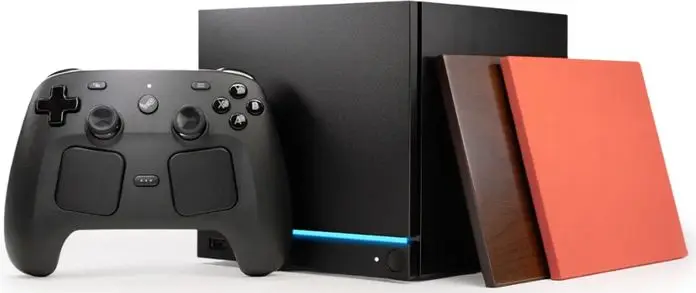
Not going anywhere. That’s just not what this protest is about. The Pro ships digital-only but takes the same clip-on disc drive as the Slim Digital Edition, so both can still play physical PS5 and PS4 discs if you bother adding the drive. Sony’s own product pages confirm that. This blackout is about future games, not the hardware you already own — and it’s worth noting Sony isn’t alone in shaking up console hardware right now; Valve’s own oddly-shaped Steam Machine just landed with its own pricing controversy, so the whole console space is having a moment.
And the Digital Edition Specifically?
It gets dragged into this conversation constantly for the obvious reason — it never had a disc drive to lose. But nothing changes for it today, and nothing changes for it after 2028 either. What actually shifts is what kind of new games show up going forward — digital only, across every PS5 variant, drive or no drive. The console was never really the story here.
Will Stores Like GameStop Stop Selling PlayStation Games?
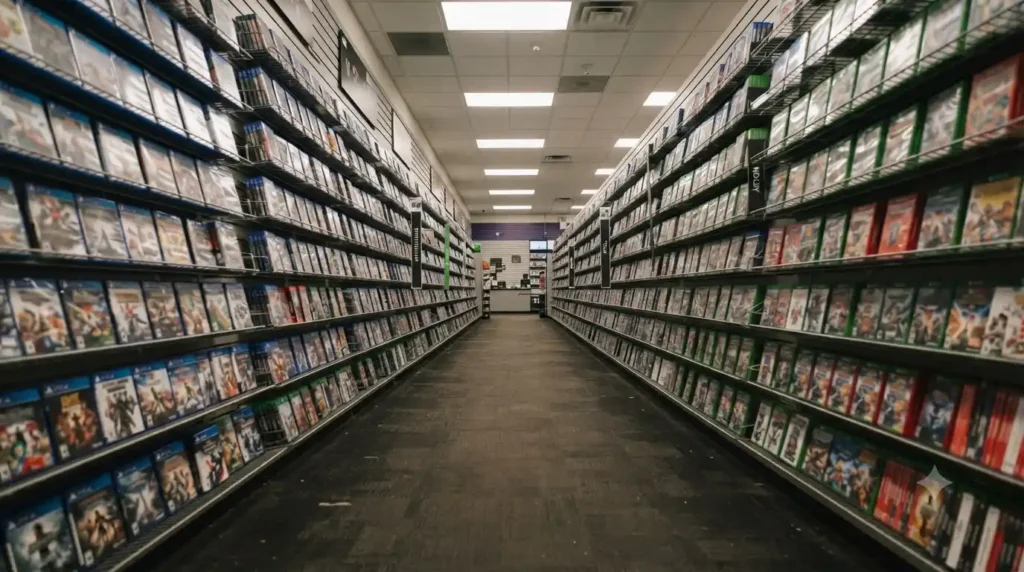
Sony hasn’t laid out the exact retail mechanics, so anyone claiming certainty here is guessing to some degree. What the company did say is that post-2028 games sell “at retailers in digital formats only” — which reads like retailers stay in the picture, just selling something different.
The likely setup is “code-in-box”: a physical box on the shelf, but crack it open and there’s a printed code instead of a disc. Rockstar already did this with GTA 6’s physical edition, so this isn’t some hypothetical — it’s basically the template.
Here’s where it gets uneven though. GameStop’s whole business runs on used games and trade-ins, and a download code chained to your PSN account can’t be resold to anyone. That entire side of the business just doesn’t have anything to plug into anymore. Walmart, Best Buy, Target — gaming’s a small slice of what they sell, so they’ll barely feel it. GameStop’s the one actually staring down a real problem, and it’s not really about whether the boxes stay on shelves. It’s the used-game economy underneath them that’s quietly getting gutted.
PSN Blackout 2026: Is PSN Down?
Biggest mix-up going around: people keep assuming “blackout” means PSN crashed. It didn’t. Sony hasn’t touched the servers.
Anyone not participating logs in, plays online, buys games — same as any other day. This lives entirely on the player side.
What is being tracked: active user numbers and Store purchases. Sony reports 125 million monthly active users to investors. The bet protesters are making is that a visible enough drop in those numbers — even for a few weeks — forces a conversation internally.
Whether that’s realistic is a separate question.
Sony PlayStation Blackout Response: "No Impact on Our Business
Sony CFO Lin Tao addressed investors directly. The short version: the company isn’t budging.
Tao said Sony is seeing “no impact on our business” from the backlash, and followed that up by saying the company “doesn’t see that there will be any negative impact.” He did acknowledge that users have strong emotional ties to physical media, and that Sony would need to think about how to respond to that feedback — but stopped well short of any hint at reversing the decision.
For context: Sony’s stock jumped roughly 3.2% after the original disc announcement. Investors aren’t spooked.
Sony also sent out a statement mid-blackout reminding users that digital game purchases are licenses, not ownership. The wording was clinical, but the message was hard to miss — Sony isn’t pretending the math is different than it is. You can read more about how Sony officially frames digital purchases on the PlayStation Terms of Service.
PlayStation Blackout Stats — How Big Has This Actually Gotten?
Here’s what the numbers look like right now:
| What | Number |
|---|---|
| Petition signatures | 370,000+ |
| Blackout start date | August 23, 2026 (7:00 PM local) |
| Original end date | August 30, 2026 |
| Current status | Indefinite — no fixed end date |
| PS5 units sold (total) | 95 million+ |
| Sony monthly active users | 125 million |
| Sony stock change after disc announcement | +3.2% |
For scale: 370,000 signatures on a petition sounds big, and it is — but it’s still a fraction of the 95 million PS5 units sold. That gap is exactly what Sony’s pointing to when it says the business looks fine.
The GTA 6 Problem: Will the Blackout Kill Its Own Momentum?
This is the tension that’s been building since the protest went indefinite.
Marvel’s Wolverine drops September 15. GTA 6 drops November 19.
The original one-week blackout cleverly avoided both — August 23 to 30 is a dead period for major releases. But now that the protest has no end date, the calculus changes completely. How many people who said they’d go dark actually stay dark when GTA 6 launches?
Critics of the protest have been asking this question since day one. A boycott during a quiet week is easy. Skipping the most anticipated game in years is a different commitment entirely. If you want to see what GTA 6 is bringing to the table, we’ve covered GTA 6’s AI features and what Rockstar has confirmed separately.
The Does It Play? account knows this. Their response: “Pedal to the metal or we won’t get anywhere.”
It’s a fair point. A boycott with a guaranteed end date is just a vacation from your console. No deadline is the only version that actually creates pressure.
Will It Actually Work?
Tough to say, and leaning skeptical here. A quiet week on the charts gets attention, sure, but it’s a completely different animal from getting Sony to walk back a strategy it’s been building toward for a while — this isn’t a knee-jerk decision the company can just quietly reverse under pressure.
Sony’s CFO has already told investors the numbers look fine. The stock went up after the disc announcement, not down. And 370,000 petition signatures — real as they are — is still a small slice of 95 million PS5 owners.
The timing criticism is also legitimate. Landing the protest during a low-release week keeps the cost of participation low, which helps sign-ups. But it also means the pressure Sony feels is minimal. Hit this boycott against a major first-party launch and you’re threatening day-one sales numbers that actually show up in quarterly reports. That’s a different conversation.
What the blackout has done is prove that a real chunk of PlayStation’s audience still cares about owning what they buy — and that they’re organized enough to coordinate something visible. That argument doesn’t disappear when the hashtag fades.
Should You Actually Sit It Out?
Up to you, no judgment either way. If the disc decision genuinely bothers you and you want your silence to count for something, skipping a week — or longer — costs you basically nothing right now. If you don’t care, keep playing — nobody’s stopping you and the console works exactly the same regardless of what you choose.
Just be clear on what you’re actually protesting. This isn’t “boycott the PS5” or “boycott Sony forever.” It’s specifically about what happens to physical PlayStation games after January 2028 — and now, how long it takes Sony to address that.
So What Does 2028 Actually Change?
Nothing right now. Your disc collection works. Anything released before the cutoff stays playable on compatible hardware — Sony’s said as much directly.
The real hit lands later, and it lands unevenly. If you’re someone who waits for a physical release, hunts used copies, or just likes owning a shelf of games, your options for new titles shrink hard once 2028 arrives. If you already buy everything digitally, you’ll barely notice a thing changed.
That split is exactly why this got so loud. It’s not one universal experience — it’s a shrug for some players and a genuine loss for others.
Bottom Line
This was never really about one announcement. It’s frustration that’s been building for a while, and the disc news just happened to be the thing that finally got people organized enough to do something about it instead of just complaining online.
Sony’s not budging on the actual policy — new discs stop in January 2028, everything before that keeps working. The CFO has said publicly the company sees zero business impact. The stock went up.
The blackout’s real test isn’t August 30 — that date’s already gone. It’s whether enough people are still dark when Marvel’s Wolverine drops September 15, and then again when GTA 6 lands November 19.
Sony isn’t blinking. The question is whether the people who unplugged their consoles will.
Frequently Asked Questions
Is the PlayStation Blackout still happening?
The original week-long window (August 23–30, 2026) has ended, but organizers have removed the end date and are asking participants to keep their consoles off indefinitely, until Sony reverses its physical disc decision.
Is this an official Sony event or an outage?
No. It’s a player-led boycott with zero involvement from Sony. PSN servers are fully operational — this is entirely about players choosing not to log in or spend money.
How will we know if the blackout actually worked?
The clearest signal will come from Sony’s next quarterly earnings report, which discloses monthly active user numbers. A visible dip would be the first real evidence of impact; so far, Sony says it’s seen none.
What is the PlayStation Blackout 2026?
The PlayStation Blackout 2026 is a player-organized protest that began August 23, 2026. Gamers voluntarily stopped logging into PSN, playing games, and making purchases on the PlayStation Store to protest Sony’s decision to end physical disc production for all new games starting January 2028. The movement runs under the hashtag #PSBlackout and was organized by the Does It Play? account, backed by the Stop Killing Games campaign.
When is the PlayStation Blackout 2026?
It started August 23, 2026 at 7:00 PM local time. It was originally planned to end August 30, but organizers have dropped the end date — it’s now indefinite until Sony changes course.
Will my physical PS5 games stop working?
No. Anything released before January 2028 keeps working on compatible consoles. The change only affects new games after that cutoff.
What did Sony say about the PlayStation Blackout?
Sony CFO Lin Tao told investors the company sees “no impact on our business” from the backlash, and that it “doesn’t see any negative impact” going forward. Sony also sent a Terms of Service reminder email mid-blackout, reminding users that digital purchases are licenses, not ownership.
Why are gamers boycotting Sony?
The immediate trigger is Sony’s July 1, 2026 announcement that physical disc production ends for new PlayStation games in January 2028. But organizers say it’s the final straw on top of studio closures, live-service failures, neglected franchises, and repeated price increases.
Does the blackout affect PS5 Pro or PS5 Slim?
No. Both keep working exactly as before. Whether you participate is entirely your call.
How many people signed the PlayStation disc petition?
The “Don’t Kill the Disc” petition on Change.org has passed 370,000 signatures as of August 27, 2026.
Will the PlayStation Blackout affect GTA 6?
The blackout is now indefinite, which means it overlaps with GTA 6’s November 19 launch. Organizers are encouraging players to stay off PlayStation through major releases — but whether participants follow through on that is the protest’s biggest open question.